

Malta WWII
Virtual Museum
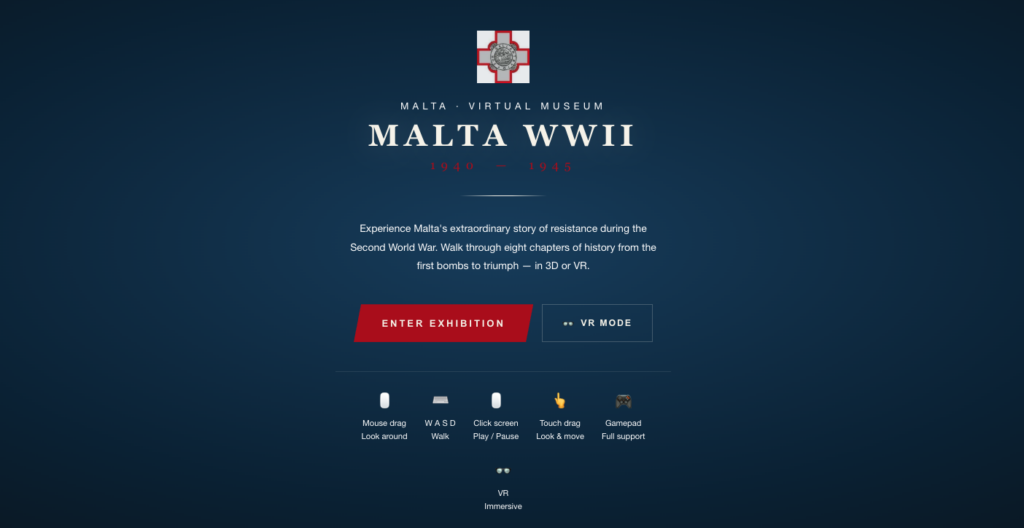
An immersive WebXR corridor experience walking visitors through eight chapters of Malta's wartime history accessible in any browser or through a VR headset, without installation.
ScrollThe Concept
A corridor through living history
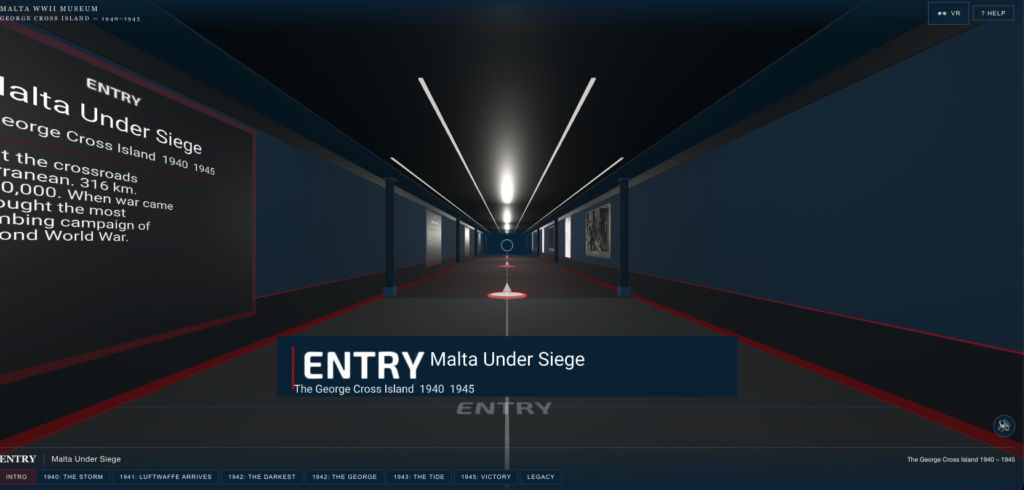
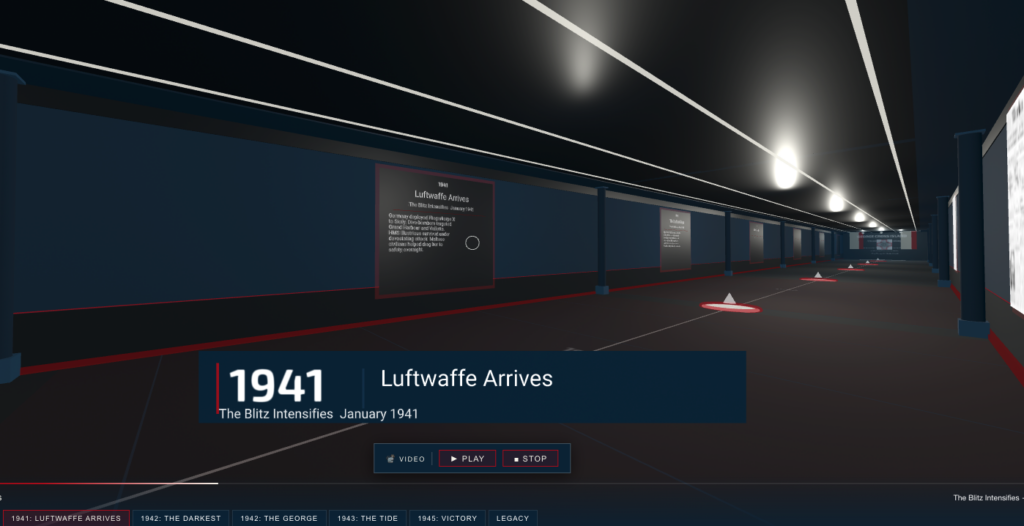
Visitors walk through a 3D corridor museum, moving from room to room across eight chapters from Italy's declaration of war in June 1940 to liberation in May 1945.
Built with A-Frame and WebXR, the experience runs on desktop, mobile, and standalone VR headsets. No app. No installation. Just a browser or a Meta Quest.
This project sits at the intersection of WebXR, heritage education, and GenAI-assisted development a proof of concept for what open-web immersive technology can do in cultural and civic contexts.
Build status
What's been built. What's coming.
The museum environment, navigation, and core VR systems are functional. Content integration and optimisation are the current focus.
Completed
- Full 3D corridor with period lighting & architecture
- Eight themed sections with information panels
- Archival imagery and video screens per section
- Porter intro video at entrance
- Meta Quest VR — snap-turn, blink teleport, laser pointers
- Desktop & mobile navigation (WASD, mouse, touch)
- Custom wall collision system
- Background period music with fade control
- Minimal gaze cursor visible only on hover
In progress
- Video content integration & audio sync per section
- Performance optimisation for standalone Quest
- Accessibility refinements
- Language localisation
Technology stack
A-Frame 1.6 · WebXR · aframe-extras
Three.js VideoTexture · Custom JS components
Meta Quest · Desktop · Mobile
Building this as both a personal project and a working proof of concept, I explore the potential of WebXR within heritage and educational contexts in collaboration with GenAI demonstrating how fostering creativity, logical thinking, and problem-solving remains fundamentally a human-driven activity.